

Aftermarket wheels change more than a vehicle’s stance. They also change the way an owner needs to think about fitment, cleaning, hardware, and long-term inspection. Incubus Wheels has model lines sold through aftermarket retailers, and buyers commonly compare designs by diameter, bolt pattern, offset, finish, and vehicle use case before they choose a set.
This guide keeps the advice practical: how to understand the major wheel-fitment terms, how to clean alloy wheels without damaging the finish, and when to involve a tire or wheel professional before installation. It is written for owners researching Incubus-style custom alloy rims, not as a substitute for the vehicle manual, wheel manufacturer specifications, or a certified shop inspection.
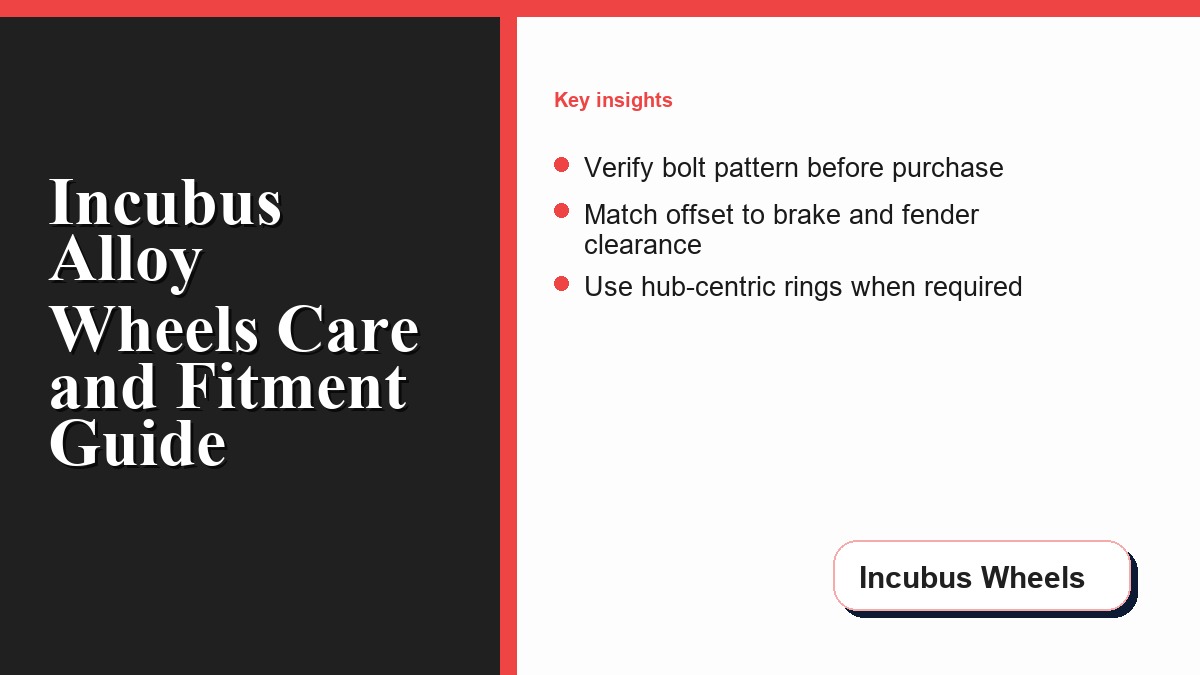
What Incubus Wheels Buyers Should Verify First
Before choosing a wheel by appearance, confirm that the brand, model, and size information comes from a reliable source. The official Incubus site lists the brand’s wheel catalog and company contact details, while retailers such as Fitment Industries, Victoria Tire, and Wheels & Spinners show retail availability for Incubus models. The official Incubus site is also useful for checking current wheel names and manufacturer-facing information.
For corporate background, use public sources carefully. The official Incubus about page and public profile information for Amar Jot identify the brand and leadership context, but fitment decisions should still come from product specs, the vehicle manual, and a shop that can inspect the actual vehicle.
Fitment Terms That Matter Before Installation
Wheel fitment is the match between the wheel, tire, hub, brake clearance, suspension, and fender space. A good-looking wheel can still be wrong for the vehicle if one measurement is off. The first check is bolt pattern, also called PCD. This is the number of lug holes and the diameter of the circle those holes form. If the PCD does not match, the wheel should not be forced onto the hub.
Offset is the distance between the mounting pad and the wheel centerline. Positive offset moves the wheel inward, negative offset pushes it outward, and zero offset places the mounting pad at the centerline. Offset affects tire poke, brake clearance, suspension clearance, and fender rubbing. For a deeper setup walkthrough, see the Incubus Wheels guide to adjusting wheel offset.
Hub bore is the center opening of the wheel. Many aftermarket wheels use a larger bore so the same design can fit more vehicles, which may require hub-centric rings. Those rings help center the wheel on the hub and reduce vibration risk when they are correctly specified. Hardware choices matter too, which is why owners should review wheel installation kit basics before buying lug nuts, socket keys, or rings.
The easiest way to avoid fitment mistakes is to write down the current wheel and tire setup before shopping: diameter, width, offset, tire size, bolt pattern, hub bore, and any spacer or lift information already on the vehicle. Then compare the new package against the old one before ordering. If the vehicle has oversized brakes, lowered suspension, lifted suspension, wide tires, or modified fenders, the check should happen before the wheels are mounted because those changes can reduce the clearance that a standard fitment chart assumes.
| Fitment Check | Why It Matters | Recommended Next Step |
|---|---|---|
| Bolt pattern | Determines whether the wheel can mount correctly to the studs. | Match the vehicle spec exactly before purchase. |
| Offset | Affects stance, brake clearance, suspension clearance, and rubbing. | Compare the proposed wheel against the current wheel and tire package. |
| Hub bore | Impacts centering and vibration control on hub-centric setups. | Confirm whether hub-centric rings are required. |
| Load rating | Must be appropriate for the vehicle and intended use. | Verify with manufacturer specs or a certified tire professional. |
A Safe Alloy Wheel Cleaning Routine
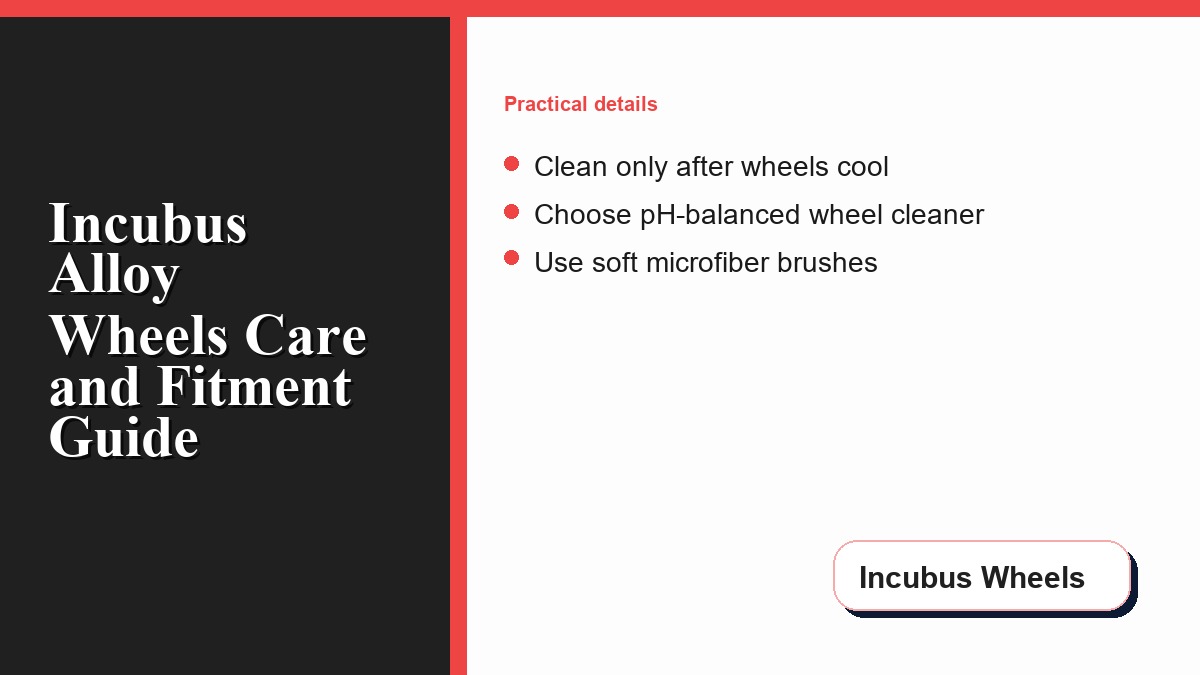
Alloy wheels are exposed to brake dust, road grime, tar, and winter chemicals. Cleaning them safely is mostly about temperature, chemistry, and tools. Let the wheels cool before washing. Rinse loose grit away first so the brush is not dragging abrasive particles across the finish. Use a pH-balanced wheel cleaner rather than household detergents, acid cleaners, stiff brushes, or steel wool.
Use a soft microfiber wheel brush for the spokes and barrel, then rinse thoroughly and dry with a dedicated microfiber towel. A wheel sealant can make future brake dust easier to remove, but it should be applied only after the surface is clean and dry.
WD-40 can help loosen tar or adhesive residue in limited spot-cleaning situations, but it is not a regular wheel cleaner. It can leave an oily film that attracts dust and road dirt. If it is used for a small spot, wash that area afterward with a pH-balanced cleaner and water.
Cleaning frequency depends on driving conditions. A garage-kept weekend vehicle may need only a light wash after use, while a daily driver in wet weather, dusty roads, or heavy stop-and-go traffic may collect brake dust quickly. The key is not to let corrosive residue sit for weeks. A gentle, repeatable process protects the finish better than an aggressive rescue cleaning after the wheel is already stained.
Post-Install and Off-Road Maintenance
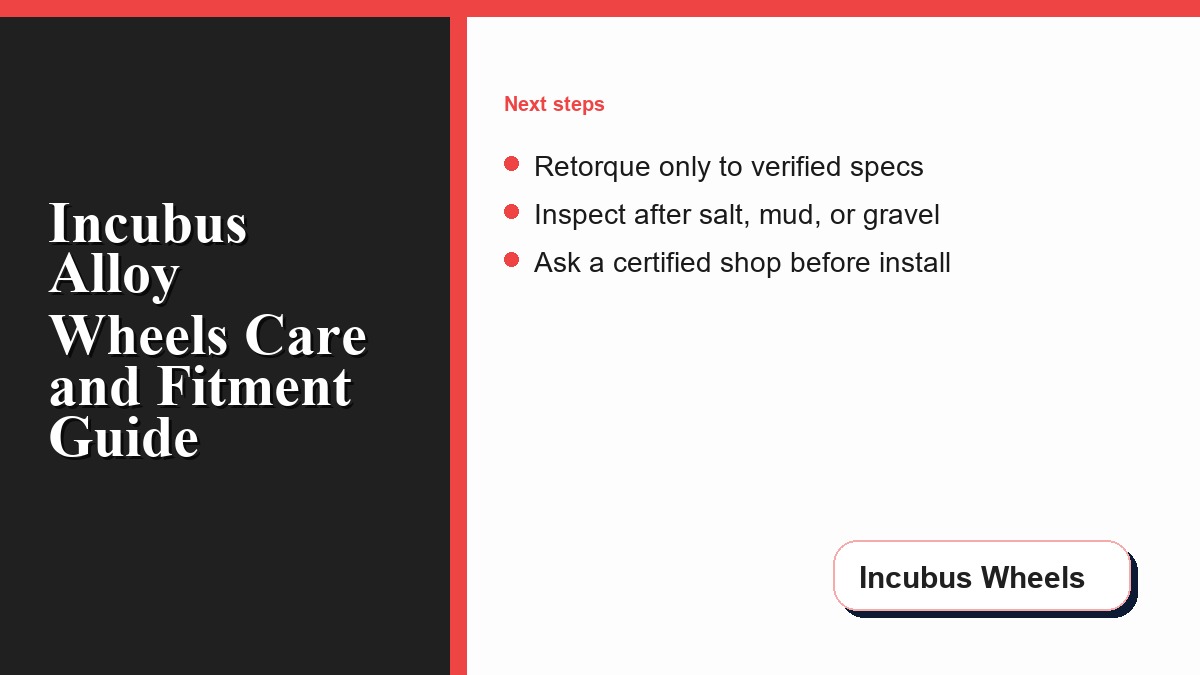
After new wheels are installed, ask the installer when to recheck lug torque. Many shops recommend a retorque after the first short driving interval, but the exact value and timing must come from the vehicle manual, wheel documentation, or the shop’s verified procedure. Do not guess torque values from a general article.
Owners who drive through salt, mud, or gravel should inspect more often. Salt can damage protective finishes if it sits on the wheel for long periods. Off-road use can leave bent lips, gouges, missing center caps, or cracks that need professional inspection. For cosmetic recovery topics, see the Incubus Wheels resource on restoring off-road wheels.
Installation Checklist Before You Drive
- Confirm bolt pattern, diameter, width, offset, hub bore, and load rating.
- Confirm tire size, brake clearance, fender clearance, and suspension clearance.
- Use compatible lug hardware and hub-centric rings when required.
- Clean mating surfaces before installation.
- Use the correct star-pattern sequence and verified torque spec from the manual, manufacturer, or shop.
- Review the full wheel installation process before attempting any DIY work.
Safety note: Custom wheel fitment is vehicle-specific. Incorrect offset, bolt pattern, hub bore, load rating, or hardware can cause rubbing, vibration, handling issues, lug-stud damage, or wheel failure. Confirm all specs with the vehicle manual, wheel manufacturer, or a certified tire and wheel professional before installation.
Frequently Asked Questions
Are Incubus wheels reliable for daily driving?
Reliability depends on correct fitment, correct installation hardware, load rating, tire choice, maintenance, and driving conditions. Use official specs and professional fitment confirmation instead of judging by appearance alone.
Who is associated with Incubus Wheels leadership?
Public profile information identifies Amar Jot as Chief Executive Officer of Incubus Wheels. For current corporate details, check the official Incubus site and current public profiles directly.
Where can I check Incubus wheel models?
Start with the official Incubus wheel catalog, then compare retailer pages for current sizes, finishes, and availability. Retailer inventory can change, so verify before ordering.
Can WD-40 clean aluminum wheels?
It can help loosen small spots of tar or grease, but it should not replace a pH-balanced wheel cleaner. Wash off any oily residue after spot cleaning.
What happens if the offset is wrong?
The tire or wheel may rub the fender, suspension, or brake components. It can also affect steering feel and tire wear. Have the setup checked before driving.
0 Comments